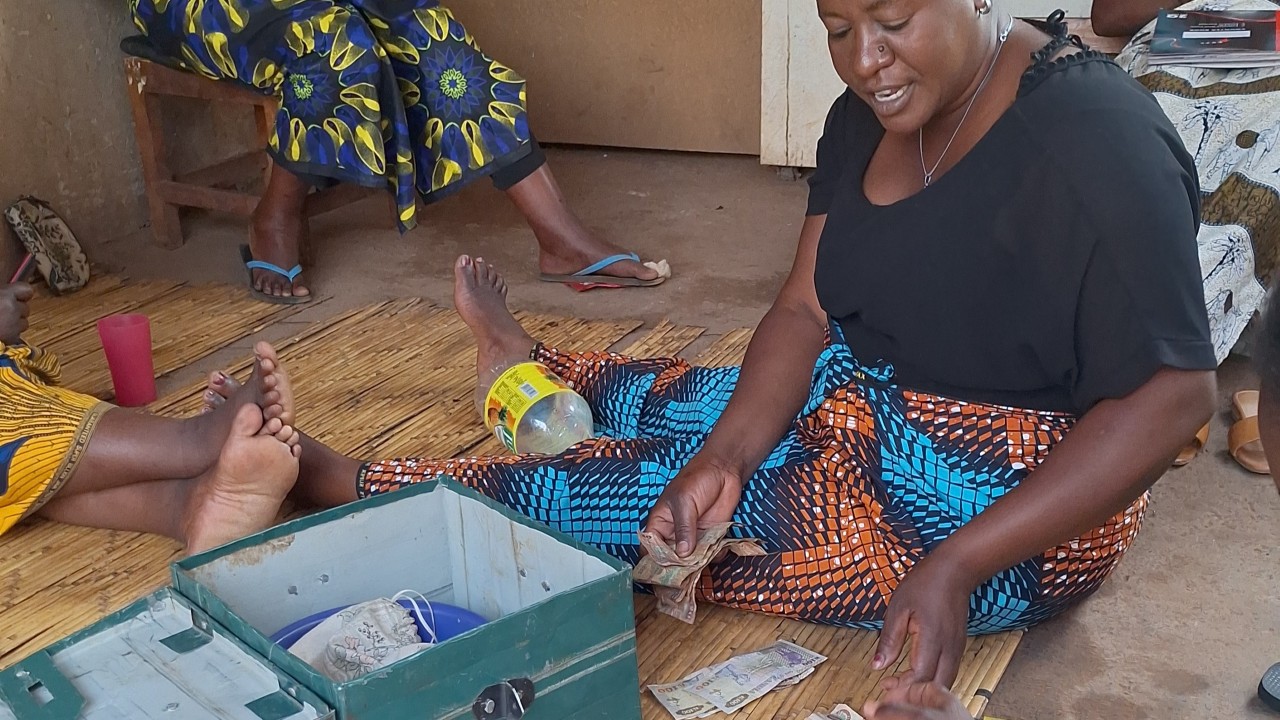
In Ndola, Zambia, women gather regularly as part of a community savings club focused on basic financial literacy. The photograph on this page shows members seated together as they count money, record amounts, and manage shared funds during a group meeting.
The savings club operates through weekly gatherings where women contribute set amounts, track balances, and discuss how funds will be used. Participation is structured around simple practices such as budgeting, saving, lending, and repayment. These sessions rely on consistency, trust, and shared responsibility among members.
Financial literacy in this setting is learned through direct experience. Women handle cash, record transactions, and observe how collective savings grow over time. The process emphasizes transparency and accountability, with members participating in decisions about loans and repayment schedules.
The club also serves as a space for shared learning. Members support one another as they become familiar with basic financial concepts, including interest, record keeping, and household budgeting. The setting allows women to ask questions and build confidence through repeated practice.
For many participants, this approach provides an alternative to formal financial education. Learning takes place within the community, without classrooms or textbooks, using methods grounded in daily life and practical needs.
The savings club contributes to broader household planning. Members discuss goals such as school fees, small business activities, or family expenses, using the structure of the group to plan and prioritize. These conversations take place alongside the weekly financial activities.
This page documents one example of how financial literacy for women is supported through community-based savings practices. It highlights the role of structured group meetings in building familiarity with money management through shared participation.