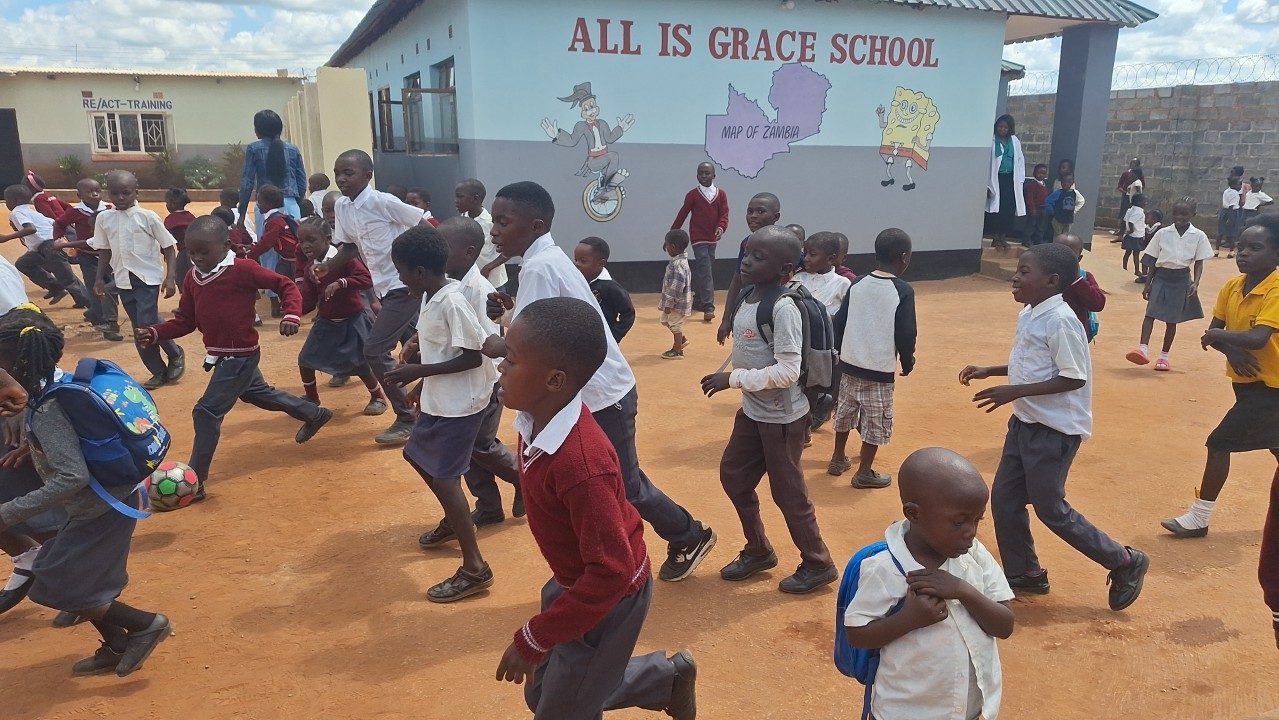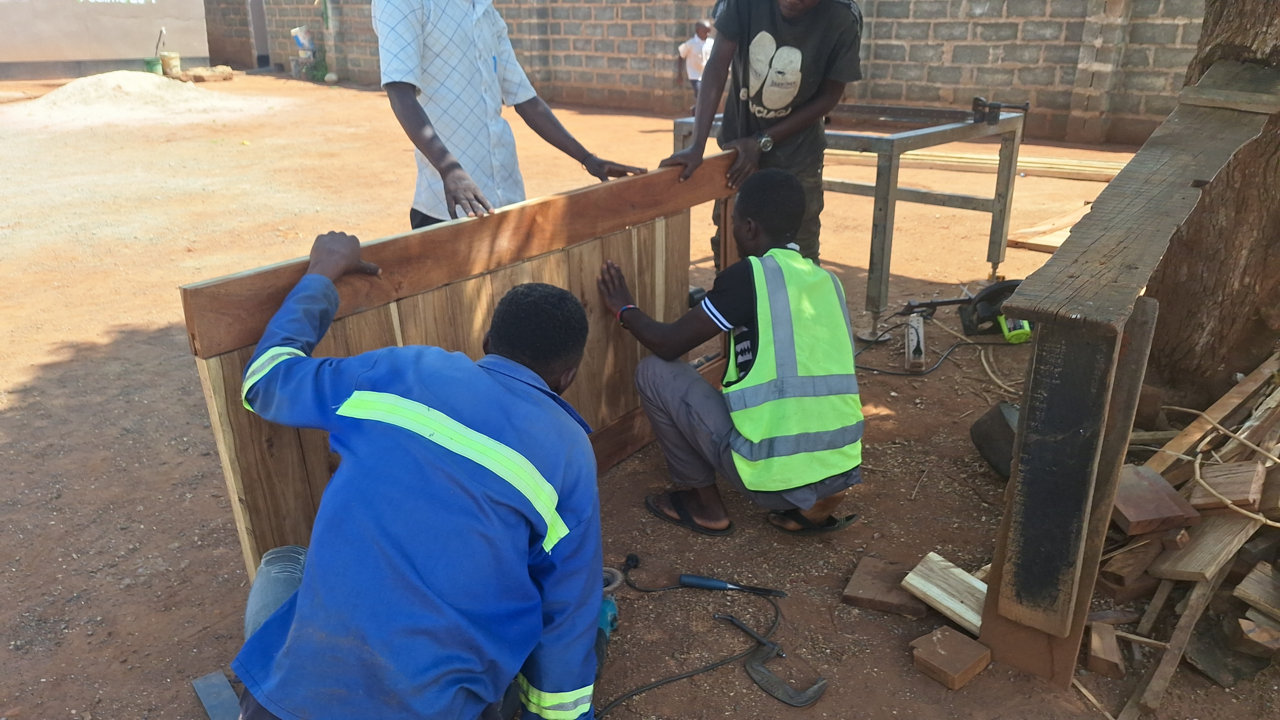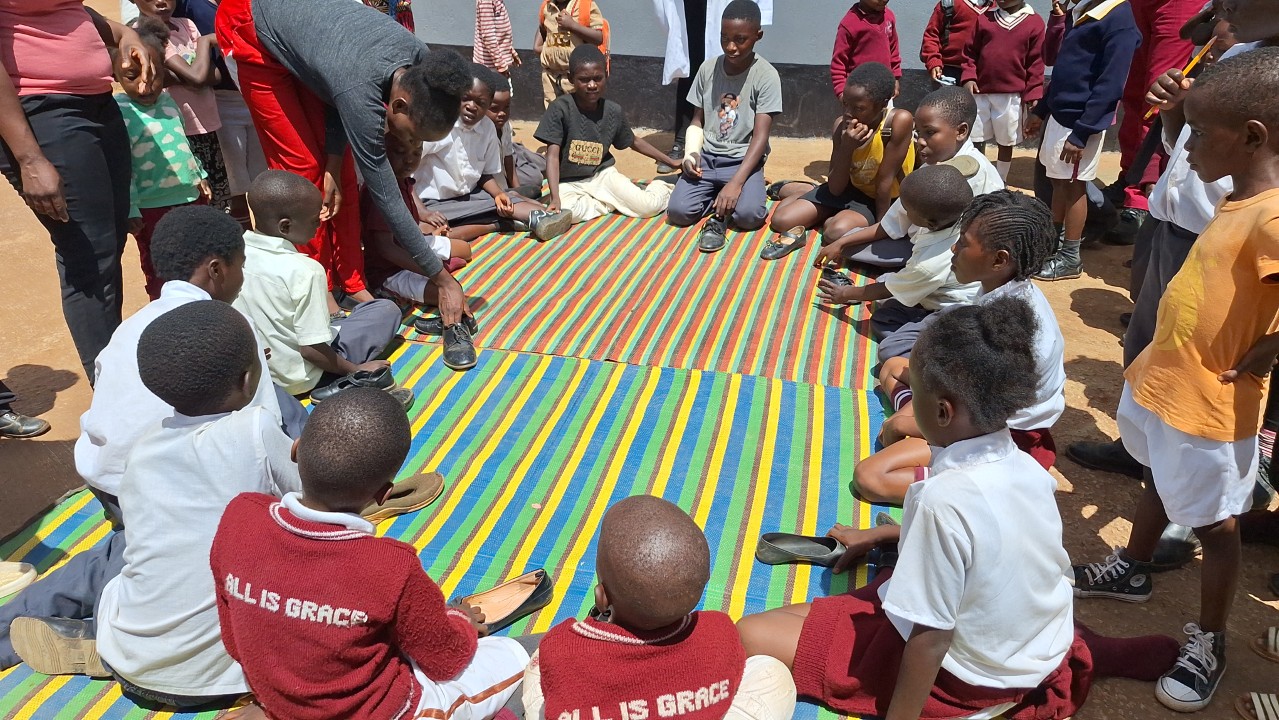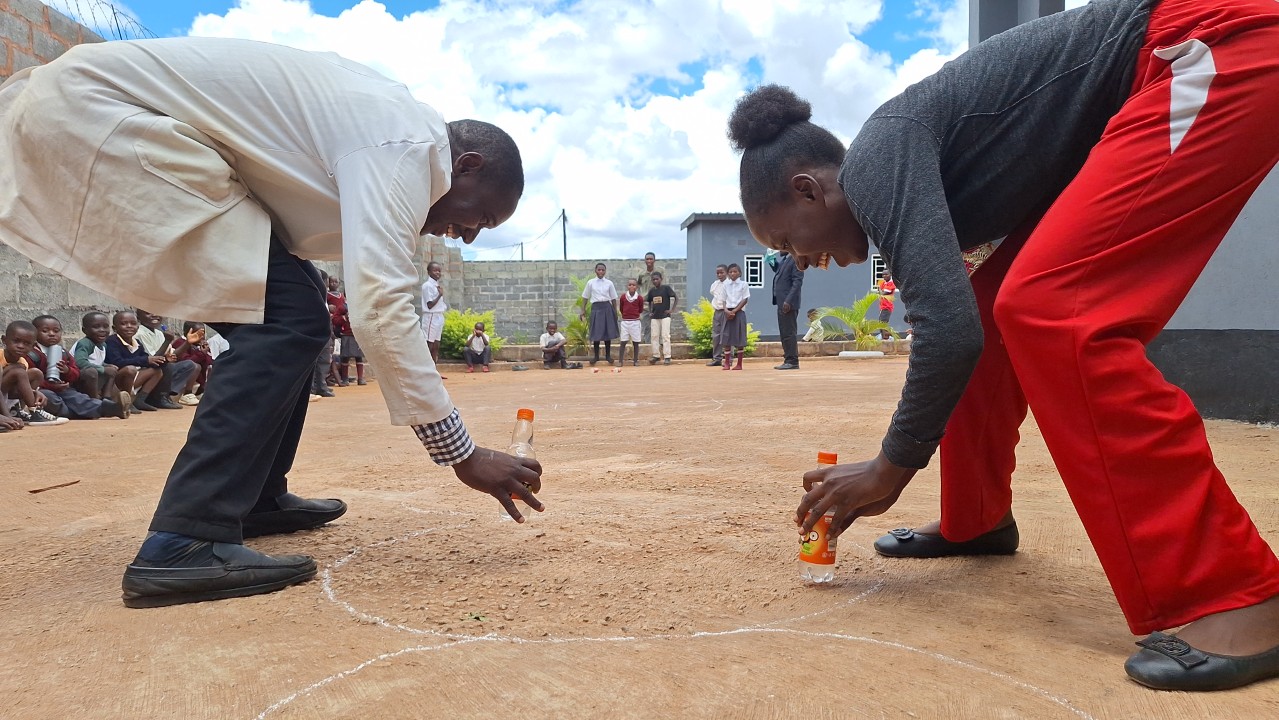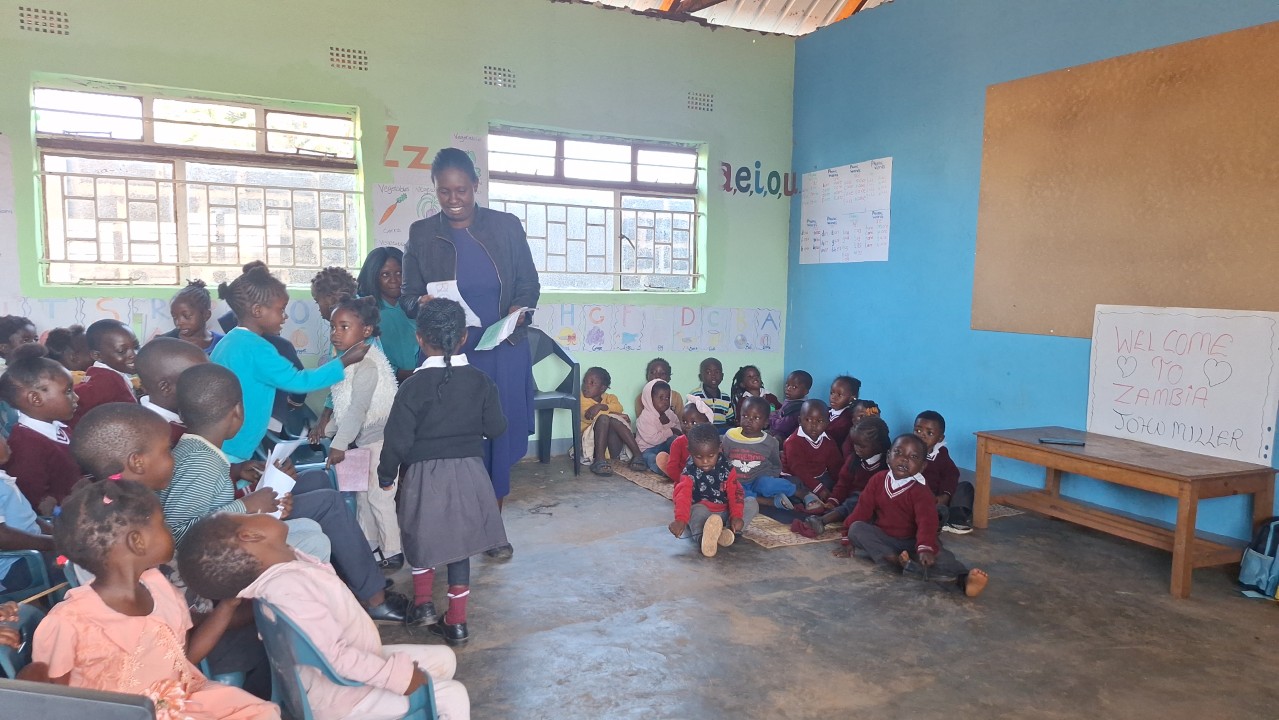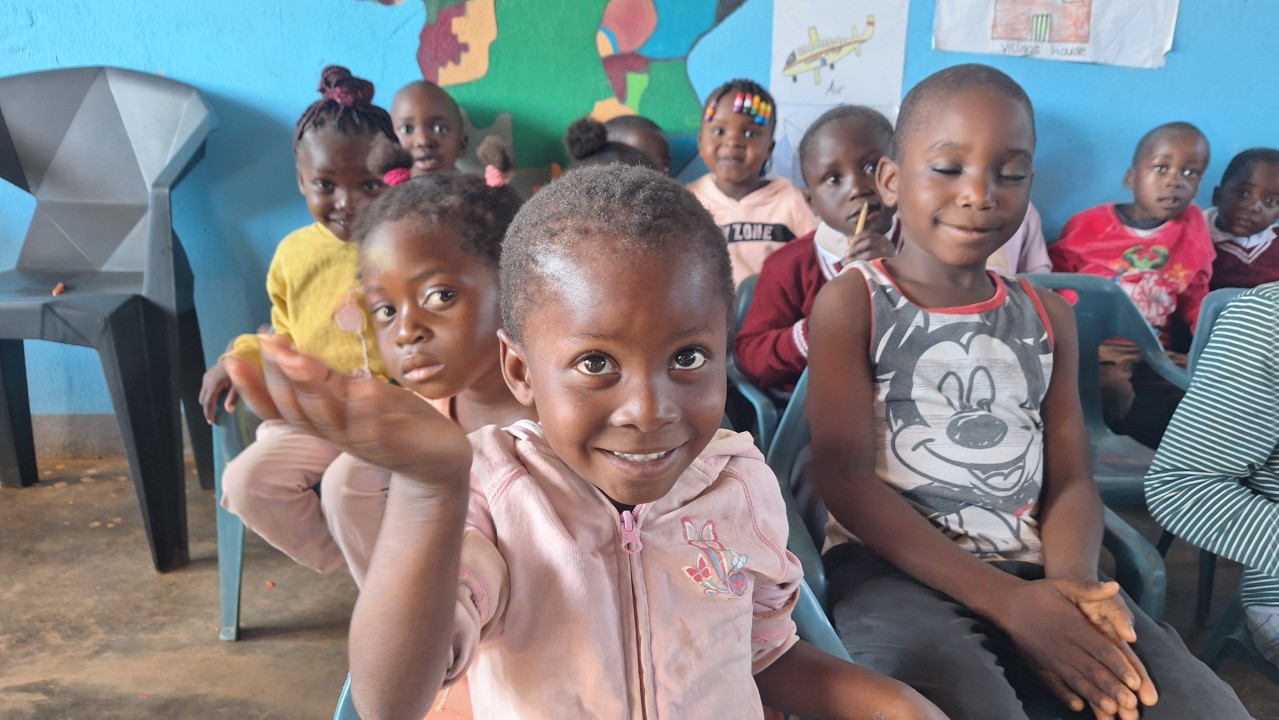
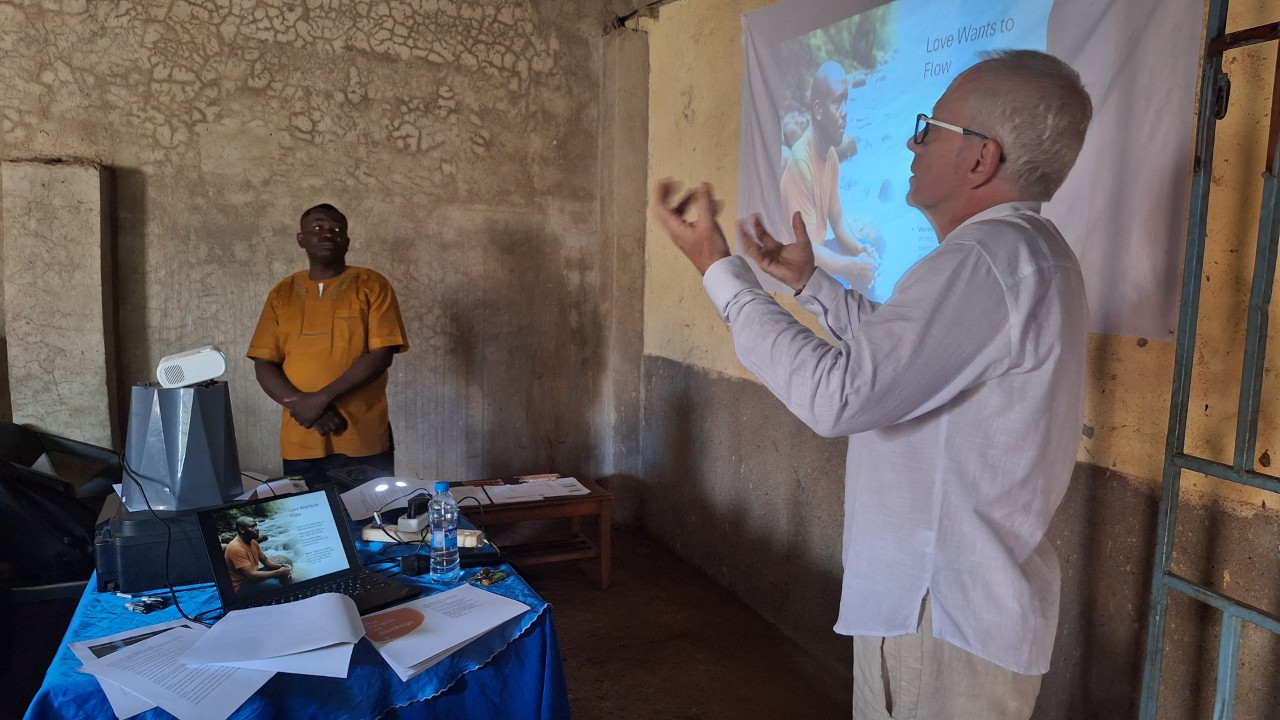
In July 2025, a trauma healing workshop was held for adults in a community in Ndola, Zambia. The workshop was led by AGCPI founder John Miller and the director of the All Is Grace School, Justin Samba, and took place in a simple carpentry workshop building rather than a clinic or formal meeting room. The choice of space reflected both the setting and the practical nature of the work.
Fifty community members attended. The workshop began with a discussion about how experiences from childhood can influence adult relationships and behavior. Many participants had not encountered these concepts before, but they responded with recognition and engagement. Presenters used a slide titled “Love Wants to Flow” to introduce the idea that unmet emotional needs from early life can shape patterns in adult life.
AGCPI’s approach to trauma healing holds that emotional wounds are common in families affected by poverty or limited emotional support, and that understanding these patterns can help people communicate and relate more openly. The facilitators encouraged participants to reflect on personal history and the ways it can affect relationships.
The workshop was conversational rather than purely instructional. Concepts were discussed in both English and the local language, with examples drawn from everyday life and community values. The emphasis was on connecting psychological insight with participants’ own experiences, without imposing outside frameworks.
Originally planned for a small classroom built for trauma work, the event was moved to a larger workshop space when interest exceeded expectations. Attendees accepted the simple seating and surroundings, focusing on the content rather than the setting. One local community leader noted the need for more workshops for both adults and children.
The organizers described this workshop as part of a continuing effort rather than a one-time event. Future sessions are expected to explore topics such as parenting, emotional resilience, self-worth, and grief, with the goal of creating ongoing opportunities for reflection, conversation, and mutual support.